


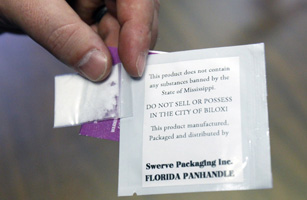
As I wrote here last week, the Drug Enforcement Administration (DEA) had previously warned that it would place an emergency ban on five “legal high” substances commonly used in so-called fake marijuana.
Before 9 a.m. Tuesday, the DEA announced that the emergency ban goes into effect today. That means that selling fake pot products like K2, Spice, Blaze and Red X Dawn — if they continue to include synthetic cannabinoids JWH-018, JWH-073, JWH-200, CP-47,497, or cannabicyclohexanol — is now officially illegal.
(More on TIME.com: Do Bans on ‘Legal Highs’ Threaten Pharmaceutical Development?)
These substances have been placed in the federal drug schedule I on an emergency basis, which means that they have been designated as having no medical use for at least one year while the agency considers whether or not to make the scheduling permanent.
“Young people are being harmed when they smoke these dangerous ‘fake pot’ products and wrongly equate the products’ ‘legal’ retail availability with being ‘safe,'” said DEA Administrator Michele M. Leonhart in the press release announcing the ban. “Parents and community leaders look to us to help them protect their kids, and we have not let them down. Today’s action, while temporary, will reduce the number of young people being seen in hospital emergency rooms after ingesting these synthetic chemicals to get high.”
In the past, manufacturers of such products did not stop selling “fake pot,” but simply switched to using similar chemicals that are still legal — something that is likely to occur rapidly under the new ban.
Dan Francis, head of the Retail Compliance Association, a group that represents retailers who sell these substances, said in an earlier interview that despite his members’ opposition to the ban on the chemicals, “We’re all about compliance. [When the ban goes into effect], immediately what we’ll start doing is trying to get member stores to comply. We’re not trying to find ways to break the law. We’re trying to make sure our members understand how to keep within the law.”
The substances in “bath salts” like Ivory Wave have not yet been placed under emergency ban.