


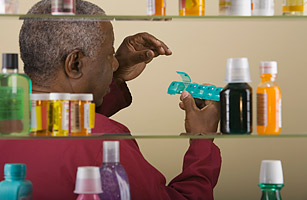
The more medications a man takes, the worse his symptoms of sexual dysfunction may be.
A new Kaiser Permanente study published this week in the British Journal of Urology International found that men who took multiple drugs — prescription or over the counter — were more likely to have erectile dysfunction than men who took fewer pills. Those who took more medications were also more likely to have severe sexual symptoms.
Many health problems that require medication, including diabetes, high blood pressure, high cholesterol and heart disease, are also known to be associated with erectile dysfunction. But even after controlling for underlying medical conditions, the researchers found a link between medication use and ED.
For the study, researchers surveyed 37,712 men aged 45 to 69 who were enrolled in the California Men’s Health Study. All participants were members of Kaiser Permanente health plans in California. The men were asked about their health, how many medications they took regularly and whether they had erectile problems.
Overall, more than half of the men (57%) used at least three drugs. Medication use tended to increase with age and weight, with older and heavier men taking more drugs regularly. African Americans used more medications than other ethnic groups.
Of all the men in the study, 10,717 — or 29% — reported moderate or severe symptoms of erectile dysfunction. Across age groups, the chance of having ED was higher in men taking more medications. About 16% of men taking two or fewer medications reported having erectile dysfunction, compared with 20% of men taking three to five medications, 26% of those taking six to nine, and 31% of those taking 10 or more medications regularly.
Men who took more pills were also more likely to have increasingly severe symptoms: among men with severe ED, 33% were taking at least 10 medications, compared with 20% who were taking two or fewer. Looked at another way, 51% of men who reported no problems maintaining an erection took two or fewer medications, while just 7% took 10 or more.
The researchers controlled for other factors that can affect sexual health like age, smoking status, diabetes, weight, high blood pressure and high cholesterol, and found that the associations remained.
The study suggests that doctors should assess how many medications ED patients are taking, and consider eliminating nonessential drugs or tailoring drug regimens to maximize benefits while reducing side effects that could affect erectile function. “Decreases or changes in the amount of or type of medication may significantly improve a man’s health-related quality of life because his ED may improve from moderate to mild,” the authors wrote.
Sora Song is the editor of TIME Healthland. Find her on Twitter at @sora_song. You can also continue the discussion on TIME Healthland’s Facebook page and on Twitter at @TIMEHealthland.