Few things stress out parents more than finding — and retaining — a good babysitter. Some moms I know guard their babysitter lists zealously, refusing to share names, not because they’re selfish lugs but because they know …
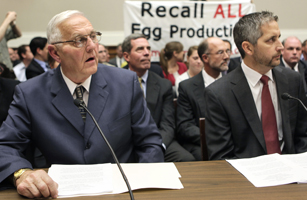
“We got big quite a while before we stopped acting like we were small,” said Austin “Jack” DeCoster, founder of Wright County Egg and the country’s eighth largest egg producer, during testimony Wednesday before the House Energy …
A new study finds that the rise in attention deficit hyperactivity disorder, or ADHD, is not a uniquely American phenomenon.
I was walking in front of Grand Central Terminal on 42nd St. one evening and overheard a man in a business suit talking — and lying — on his cell phone. “I’m in the supermarket,” he said. “Just got here.”
The stories boggle the mind: in August, a 28-year-old Washington woman claimed to be the victim of a mindless acid attack, and almost won the ultimate prize in attention-seeking — an appearance on Oprah — before admitting she …
On the tail of yesterday’s finding that teenage girls get more weight-reduction surgeries than their male counterparts is a possible explanation: it costs a lot more for them to be obese. Obese women lose out on $4,879 per year …
Anne and her husband Johannes Bulko, who have a 2-year-old son, Olvar, share one job — packer in a drug supply firm. They work alternate weeks. The spouse who’s not working stays at home with Olvar and takes correspondence …
No one likes being labeled, but celebrate your 35th birthday and get pregnant and you’re out of luck: like it or not, the letters “AMA” get slapped across your chart.
Most of us think of Hawaii as the perfect escape from our stressed out and fast-paced lives. Island life, after all, seems so idyllic and relaxing.
On the whole, Americans don’t understand the Affordable Care Act (ACA) very well. After the jump, some proof of the confusion, as well as a helpful — and adorable — video tutorial that might help clear some things up.
Ginger is a well-known home remedy for pregnant women, patients undergoing chemotherapy, and travelers with weak stomachs, who all use the root to curb nausea. But now a new study in The Journal of Pain finds that two types of …
Back in July, an FDA advisory panel voted not to recommend obesity drug Qnexa for government approval because of concerns about cardiovascular risks, memory loss and suicidal thoughts in people taking it, and potential harm to …
As you’ve probably heard by now, the first genetically engineered animal grown for food may soon be on the market. But not quite yet. The Food and Drug Administration (FDA) advisory panel assigned to assess the safety of the new …

 Family MattersParenting