
In the wake of Elizabeth Edwards’ death, many women are wondering whether the fertility treatments the former Senator’s wife underwent to bear children late in life — she leaves behind two young children, ages 10 and 12 — …

In the wake of Elizabeth Edwards’ death, many women are wondering whether the fertility treatments the former Senator’s wife underwent to bear children late in life — she leaves behind two young children, ages 10 and 12 — …
 Family MattersInfertility

Call them sperm on steroids, these 6-inch (15 cm) long wriggly organisms that Australian fertility specialists have magnified more than 7000x to help determine which are most likely to fertilize that lucky egg.
Family MattersInfertility
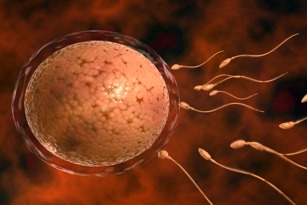
We know that egg + sperm = baby, but the nitty-gritty of how women get pregnant is largely a mystery. Now researchers at Brown University have discovered a new way to gather more information about egg cells: by sifting through …
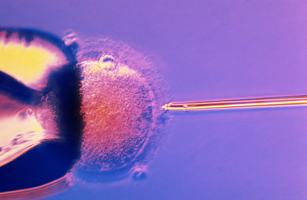
A team of researchers found that women’s success rates using in vitro fertilization (IVF) did not improve much after the first three cycles. About one in three women had a baby after their first attempt with IVF, and nearly half …
Family MattersInfertility

Who’s worried about Octomom? Initially goo-goo-ga-ga over the idea of octuplets, the public quickly changed its tune when announcement of the births was soon overshadowed by news of Nadya Suleman’s other six kids and her …
 CommittedInfertility
A Northern Irish High Court judge has declined to award damages to a family who sued a health trust that provided in vitro fertilization (IVF) services for using the wrong sperm and causing their two children to be born darker …
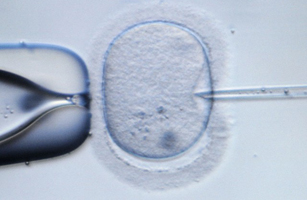
When biologist Robert Edwards, who perfected in vitro fertilization (IVF) more than 30 years ago, was awarded the Nobel Prize on Oct. 4, public reaction was swift and divided.
Family MattersInfertility

In China, overpopulation has led to a one-child rule for many couples. Its neighbor, Taiwan, has the opposite problem: Its birthrate dropped to a record low last year. With less than 20,000 babies born, moms and dads will soon …
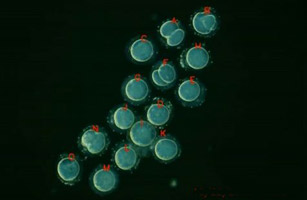
With more than four million babies and counting, in vitro fertilization (IVF) is a well-established way for couples who otherwise couldn’t have children to start or expand a family. For some, it’s their only option.
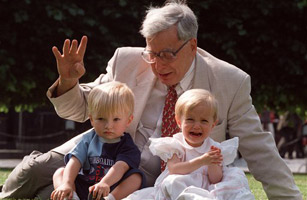
Thirty two years after the first test tube baby was born, the biologist who was the first to successfully mix egg and sperm in a lab dish and generate a healthy human baby was awarded the Nobel Prize in Physiology and Medicine.
Family MattersInfertility

Most parents-in-waiting like to daydream that their unborn child might develop a cure for cancer or improve upon the theory of relativity — in short, save the world. Now, new research indicates that your best shot of …
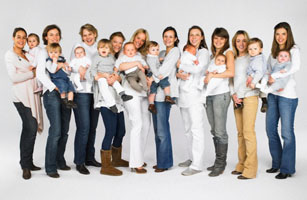
Though the ratio of boys to girls born in the United States has been on the decline for decades, new research found that moms who use in vitro fertilization might increase the number of male babies.
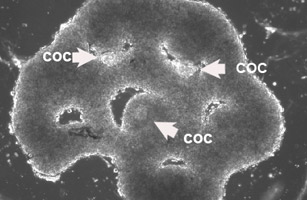
For the first time, human eggs have been matured in a three-dimensional “artificial ovary,” a development that could one day make in-vitro fertilization (IVF) treatment easier and more effective.