


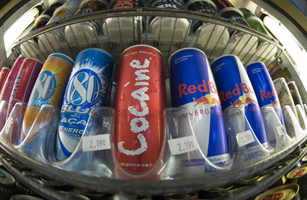
On Monday, a lawyer for a 33 year-old Kentucky man who allegedly strangled his wife with an extension cord used “caffeine intoxication” as his client’s defense. At first, a deposition claimed that caffeine, from a steady diet of energy drinks and diet pills, had rendered Woody Will Smith temporarily insane as he carried out the murder. But then in papers filed Monday night caffeine was blamed instead for compelling Smith to falsely confess to the murder.
This isn’t the first time that caffeine intoxication has been used as a criminal defense, as our colleague Megan Gibson pointed out on Newsfeed. So is it legit? (More on Time.com: Training Your Brain to Learn Better (Even Without Drugs))
Given the shifting defense strategy, it’s understandable that onlookers would be incredulous, but caffeine intoxication is one of four valid caffeine-induced mental disorders classified in the current edition of the Diagnostic and Statistical Manual of Mental Disorders (DSM-IV-TR). According to a specialist at Walter Reed Army Medical Center, the DSM-IV-TR clinical definition of caffeine intoxication is as follows:
- Recent consumption of caffeine, usually in excess of 250 mg (more than 2-3 cups of brewed coffee)
- Demonstration of 5 or more of the following signs during or shortly after caffeine use:
- Restlessness
- Nervousness
- Excitement
- Insomnia
- Flushed face
- Diuresis
- Gastrointestinal disturbance
- Muscle twitching
- Rambling flow of thought and speech
- Tachycardia or cardiac arrhythmia
- Periods of inexhaustibility
- Psychomotor agitation
- The above symptoms cause clinically significant distress or impairment in social, occupational, or other important areas of functioning.
- The symptoms are not due to a general medical condition and are not better accounted for by another mental disorder, such as an anxiety disorder.
No one can know if this disorder, in combination with a caffeine-induced sleep disorder, caused temporary psychosis in Smith. But it’s interesting in itself that the man had such a high cumulative level of caffeine in his daily diet — most people don’t think about toxicity thresholds for caffeine, which is the world’s favorite stimulant and, after petroleum, the most traded substance worldwide. (More on Time.com: Have We Created Too Many Rules for Pregnancy?)
While a few cups of joe won’t make a person murderous, it’s important to note that we are ingesting caffeine in ever greater quantities — certainly more than nature intended — thanks to diet pills, sodas and energy drinks like Red Bull and Cocaine. If nothing else, Smith’s case may make us a bit more mindful of our milligrams when we’re looking for a pick-me-up.
More on Time.com: