


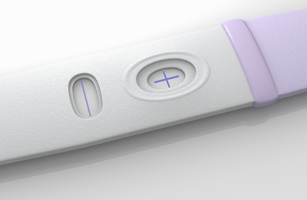
Quick quiz: does pregnancy cause weight loss or gain? It seems like a dumb question but it’s a test that the promoters of the “hCG diet” seem to have failed.
Short for human chorionic gonadotrophin, hCG is the hormone secreted by the embryo that makes a pregnancy test positive. Since the 1950s, certain doctors have promoted hCG injections as the key to hunger-free weight loss — and now, the diet is taking off on the Web. This, despite 14 clinical trials showing that hCG has no effect on weight.
The hCG diet restricts caloric intake to 500 calories a day. That alone pretty much guarantees weight loss for anyone who can manage to stick with it. But people who take a placebo instead of hCG while restricting calories do just as well as those who take the hormone — and taking the hormone doesn’t increase the likelihood that people will stay on the diet. (More on TIME.com: Placebos Work Even If You Know They’re Fake–But How?)
Some doctors will actually give injections of hCG, but many people take hCG pills, which are sold online — illegally, according to the FDA — for use in this diet. There’s even less evidence for the effectiveness of pills than the injections, however, and it’s impossible to know whether the pills actually even contain hCG.
There’s also data to show that such starvation-level diets — with or without hormones — can cause dramatic rebounds in weight in the long run, making maintaining healthy weight much more difficult.
So why does this demonstrably ineffective and potentially harmful diet aid stay popular? In brief, it’s the power of placebos and anecdotes.
For one thing, research on placebos has shown that the effect of getting an injection is more powerful than taking a pill, in terms of getting a result based on patients’ positive expectations. So the hCG injections themselves power the placebo effect, producing compelling anecdotes of successful weight loss. In reality, of course, what causes the dropped pounds is the caloric restriction — but the people who tout the diet emphasize the shots. (More on TIME.com: To Slash the Abortion Rate, Dole Out Birth Control Pills A Year At A Time)
And all of us — doctors included — are fundamentally susceptible to seduction by dramatic success stories. Our brains are biased to believe real people providing emotional accounts of change over the dull, dry statistics found in scientific papers. What better evidence could there be than a dramatic before-and-after story, our minds tell us.
But it’s worth remembering that anecdotes cannot be used to distinguish between effective and ineffective treatments: that misconception is what allowed bloodletting and other harmful practices to persist in medicine for centuries. Requiring a higher standard of proof to demonstrate causality is what has made modern medicine a success. Going beyond anecdote is the only way to know for sure whether something helps or harms.
So if you want to find a diet or other medical treatment that works, it’s better to stick with the data and avoid hCG. Unless you want to believe that a growing infant in the womb secretes hormones altruistically to avoid growing and to make its mom skinnier. Consider this: even the nausea of early pregnancy generally ends in weight gain, not loss.