


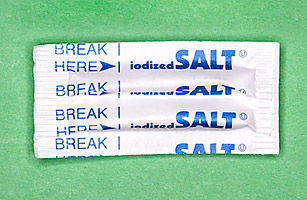
Much like cell phones and eggs, salt is one of those things that studies say is bad for you one day, but O.K. the next.
Just last year, an article in the New England Journal of Medicine estimated (using previous studies’ numbers) that the U.S. could prevent 44,000 deaths annually if Americans reduced their salt intake by 3 grams per day.
Then, early this month, a review of seven real-life interventions to reduce salt consumption found nothing of the sort. The review, from the Cochrane Collaboration, found only ambiguity, with no evidence to suggest that salt reduction did the trial participants any good or any harm.
“It’s Time to End the War on Salt,” a headline in Scientific American proclaimed last week. “For every study that suggests that salt is unhealthy, another does not,” the article said. As if to prove that point, a new paper this week in the journal Archives of Internal Medicine now argues, again, that too much salt is bad.
The latest study used national U.S. survey data linked to mortality files to show that the more salt people ate, the higher their death rates from all causes combined. The study looked further at salt intake in relation to potassium intake, and found that the lower people’s potassium and the higher their sodium, the more likely they were to develop heart disease or die of a heart-related cause.
So just how bad is salt for us exactly — and why is there so much disagreement on the issue?
The Archives study, published Monday, is actually one of perhaps hundreds over the last few decades to hint that high sodium intake may contribute to heart disease or early death. What’s relatively unusual about this study, however, is that it makes that connection directly. Most previous studies have stopped instead at linking salt to hypertension, or high blood pressure (a link that is rarely disputed), which is in turn a well-known risk factor for heart disease and heart-related death.
One common and often legitimate criticism of research linking salt intake to heart disease is that scientists often leap to the conclusion that because salt is linked to hypertension, and hypertension is linked to heart disease, adjusting salt intake should necessarily alter a person’s heart-disease risk — and therefore his risk of heart-related death.
But if a direct link between salt and heart disease or death does really exist, it could still be tough to find. There is a reason that the science is so murky. To reach any real conclusion, a study would need to include enough participants to compare heart-related outcomes by different levels of salt intake, along with some way to figure out how much sodium people are consuming exactly, which is more complicated than it sounds. “It’s tough to nail these associations,” Lawrence Appel, an epidemiologist at Johns Hopkins University and chair of the salt committee for the 2010 Dietary Guidelines for Americans, told Scientific American.
As for the Cochrane Collaboration’s inconclusive review of real-life salt-reduction interventions, Thomas Farley, commissioner of the New York City Department of Health and Mental Hygiene (which is leading a National Salt Reduction Initiative), has a methodological explanation for that too. Salt reduction in the intervention trials did appear somewhat beneficial — just not statistically significantly so. But that might be expected if the trials simply hadn’t enrolled enough people to get precise estimates of the interventions’ effects.
The Archives paper, in contrast, was not a clinical trial, but it did have enough participants to have statistical power. “I feel very confident based on the previous studies and this [latest Archives of Internal Medicine] study that lower sodium lowers your mortality risk. I don’t think the Cochrane study is inconsistent with that,” Farley tells Healthland. Farley wrote an editorial to accompany the Archives article this week.
The paper, led by Quanhe Yang of the Centers for Disease Control and Prevention, included 12,267 adults who took part in the third National Health and Nutrition Examination Survey. It looked at both the participants’ sodium intake and their levels of potassium intake, and found that those who ate high levels of sodium were at a greater risk of death from any cause during the study’s 15-year follow-up: each 1,000-mg increase in sodium intake was linked to a 20% increase in risk of all-cause mortality.
Increases in potassium intake, on the other hand, were associated with lower risks of all-cause mortality, heart disease and heart-related death: each 1,000-mg increase in daily potassium intake was associated with a 20% reduction in risk of death from any cause.
Notably, the study found no significant link between sodium intake alone and risk of heart disease or heart-related death. But when the researchers looked at the ratio of sodium to potassium intake, they found a strong effect. Participants with the worst ratios — the highest sodium and the lowest potassium — had twice the risk of death from heart disease and a nearly 50% higher risk of death from any cause, compared with people who had the highest potassium and the lowest sodium intake.
Still, the authors caution that this study suffers from some of the same problems that others do: participants’ sodium and potassium intakes were estimated from self-reports of food consumption and they were not updated over time, so if there were any changes in people’s diet, they weren’t captured.
Studies like these have prompted national efforts to get Americans to eat less salt. But critics point out also that high salt intake may affect people differently — and that among those who do eat more salt than recommended, large cuts in intake may not necessarily be healthy. Cutting salt may affect bodily processes besides blood pressure, including response to insulin and sympathetic nervous system activity.
Some researchers have suggested, therefore, that the answers to our questions about salt intake and salt reduction should lie in a massive clinical trial that would test the effects of a long-term low-salt diet. Appel, the epidemiologist at Johns Hopkins, told Scientific American that such a trial “cannot and will not be done,” and the magazine article suggests that this is “in part because it would be so expensive.”
But there is another reason, too, besides expense, that a large trial is so unlikely: it simply may not be feasible. That’s because it turns out to be quite difficult to randomly assign clinical trial participants to a particular diet — any diet — and then have them stick with it over a long period of time.
People who volunteer to enroll in a low-salt-diet trial are probably more likely than most, after all, to be concerned about their salt intake. So some fraction of study participants assigned to the comparison group — the people told to eat a normal amount of salt, rather than to follow the intervention diet — may go ahead and choose to eat a low-salt diet on their own anyway. Meanwhile, some fraction of those study participants who are assigned to the low-salt group may fall off the wagon, despite their best intentions, tempted by the abundance of high-salt foods around us all.
In other words, a trial that tests the effects of a low-salt diet would likely suffer from the same flaw that almost all diet trials face. By the time a few months of the trial have gone by, members of the treatment group aren’t eating all that differently than members of the comparison group. And that makes it difficult indeed for a statistician to estimate whether the intervention diet is really any better than a normal person’s diet.
In the end then, there may be no simple answers. Researchers and public health officials who support population-wide efforts to curb sodium intake have a vast body of evidence to support their point of view. For decades now, they can say, we have seen studies that suggest — but, yes, they only suggest — that salt is deadly. And those who don’t support efforts to curb salt consumption can claim, often correctly, that the evidence against salt is merely suggestive.