


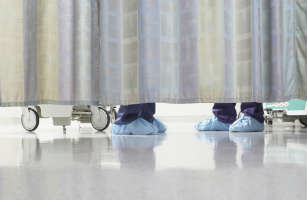
We get it — hospitals are crawling with germs. If it’s not your cell phone, the doctor’s coat or even the hands-free water faucet, then it’s the privacy curtain around the bed that’s tainted with unwanted bacteria.
Researchers from the University of Iowa presented data at a scientific conference in Chicago this week showing that they had found disease-causing bugs, including drug-resistant varieties like MRSA (methicillin-resistant Staphylococcus aureus) and VRE (vancomycin-resistant enterococcus), on 95% of hospital room privacy curtains tested. Brand new curtains were contaminated within a week, the researchers said.
The team tested 43 curtains in 30 hospital rooms twice a week for three weeks, taking 180 swab cultures total. They found:
- 12 of 13 new curtains were contaminated within 7 days
- 41 of 43 curtains were contaminated on at least one occasion
- MRSA was found on 21% of curtains
- VRE was found on 42% of curtains
One of the authors of the study received consulting fees from PurThread Technologies, a company that makes antimicrobial fabrics for hospitals — including, hey, privacy curtains.
Luckily, there’s an easier and cheaper way for doctors to prevent the spread of disease-causing bacteria from curtains (or anywhere) to patients: by washing their hands.